

Roofing Advice
Is a Metal Roof Worth the Price?
A metal roof can be worth the extra cost if you plan to keep your home long enough to benefit from its service life, can comfortably afford the upgrade, and choose the right system and installer. Standing seam is my preference for residential metal roofing. But a quality shingle roof can be the better value when the upfront budget matters most or you expect to move soon.
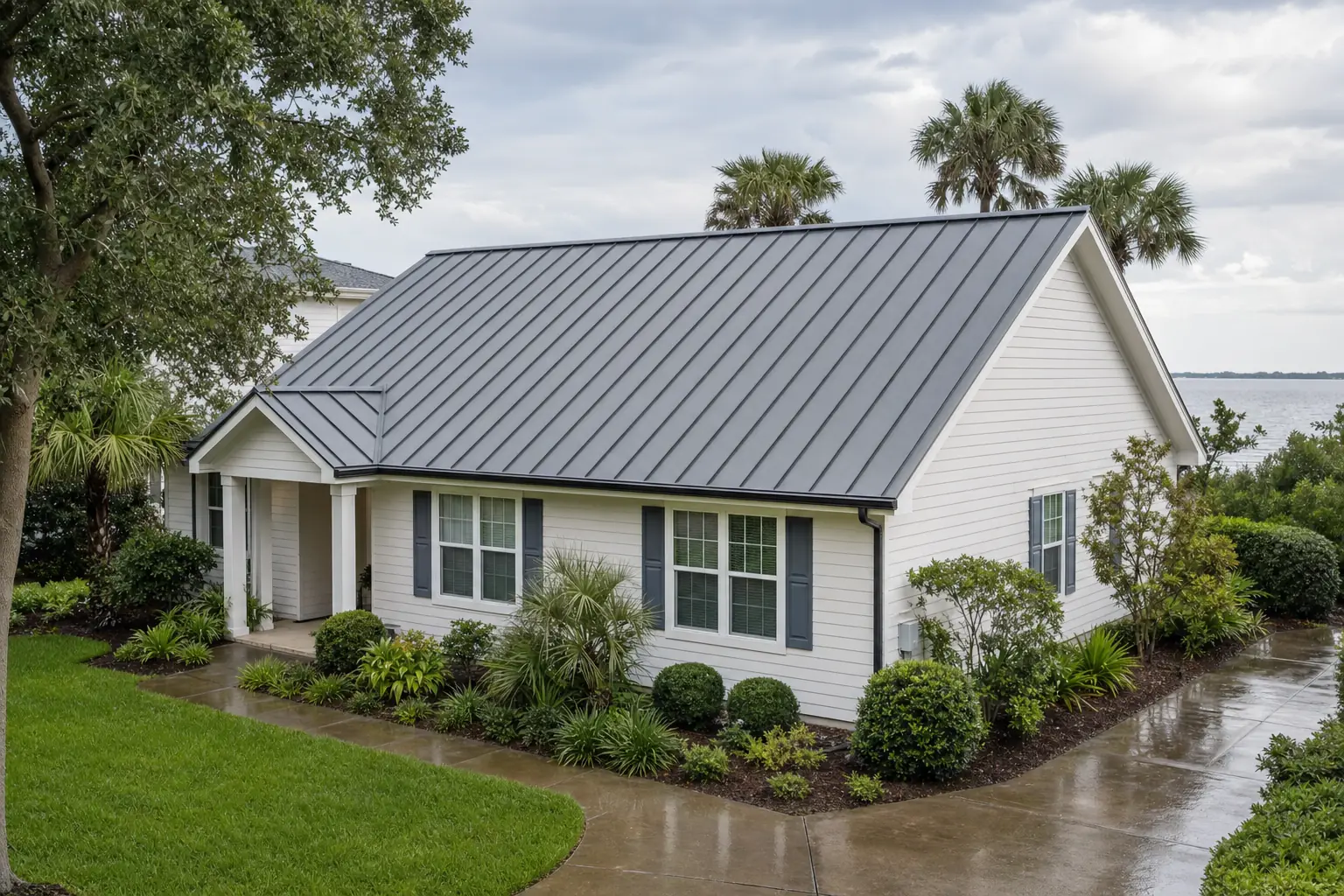
A homeowner in Robertsdale, Alabama asked me a question after Hurricane Sally that I still think about. He wanted to know why his brand-new metal roof had leaked so badly. He’d paid for metal because he was told it would last for decades. Instead, water was getting in all over the house, and nobody could figure out where.
He had been sold an exposed-fastener roof under the impression that it would perform like standing seam. That mismatch between what he expected and what he bought is the part that stayed with me. The story alone doesn’t establish exactly where the roof failed, but it makes one point clear: homeowners need to understand the system before they pay for it.
He didn’t buy the roof he thought he bought.
When people ask me whether metal is worth it over shingles, I want them to compare more than the material. Here’s what I would look at before spending the extra money.
How Much Does a Metal Roof Cost Compared With Shingles?
Metal roofing generally requires a larger upfront budget, especially standing seam. But online prices can be misleading when one includes a complete replacement and another covers installation without removing the old roof.
These published benchmarks give you a starting point. They are not RoofNuts quotes or a Georgia or Alabama market average, and their scopes differ.
| Roof system | Published installed benchmark per sq. ft. | Example for 2,000 sq. ft. of roof surface | Source and scope |
|---|---|---|---|
| Architectural asphalt shingles | $4–$6 | $8,000–$12,000 | HomeGuide installation benchmark; old-roof removal is listed separately in its guide. [1] |
| Exposed-fastener metal | $8–$9.50 | $16,000–$19,000 | The Metal Roofers’ 2026 Middle Tennessee conversion pricing. [2] |
| Standing seam metal | $11–$19 | $22,000–$38,000 | The same contractor’s 2026 Middle Tennessee conversion pricing. [2] |
Roof area is not the same as your home’s interior square footage. Slopes, overhangs, garages, and covered porches affect the area being roofed. One roofing “square” means 100 square feet of roof surface.
Ask what the estimate includes: removal, deck repairs, underlayment, flashing, ventilation work, permits, cleanup, and warranty coverage. Roof complexity, access, metal choice, finish, and local labor rates also affect the final quote. A lower number only helps if it buys the work your home actually needs.
Exposed-Fastener vs. Standing Seam: Not the Same Product
For this comparison, I’m focusing on two common metal-panel systems. Metal shingles and other profiles also exist.
| Feature | Exposed-fastener metal | Standing seam metal |
|---|---|---|
| Attachment | Visible screws pass through the panels; sealing washers help seal those points | Attachment is concealed in the panel field, with raised seams connecting panels |
| Budget | Usually the lower-cost panel option | Usually the higher-cost panel option |
| Inspection focus | Fasteners, washers, panel laps, flashing, and sealants | Seams, flashing, penetrations, and attachment-related issues |
| My buying priority | Understand the upkeep and exact specification | Verify the panel system suits the roof and the installer knows it |
Exposed-fastener metal
Visible fasteners penetrate the panels; sealing washers help keep water out at those attachment points.
Standing seam metal
Raised panel seams with concealed attachment in the panel field; exact connection details vary by product.
Some people call exposed-fastener roofing “grommeted” or screw-down roofing. The important part is that it has exposed fastener penetrations that need attention over time. Standing seam reduces those penetrations in the panel field, but it is not maintenance-free. MBCI discusses inspection needs for both systems. [3]
There is no universal rule that every exposed-fastener roof must be “re-grommeted” after five to seven years. Follow the specific manufacturer’s maintenance instructions and inspection findings. Fastener or washer repairs may be needed; timing depends on the system and conditions.
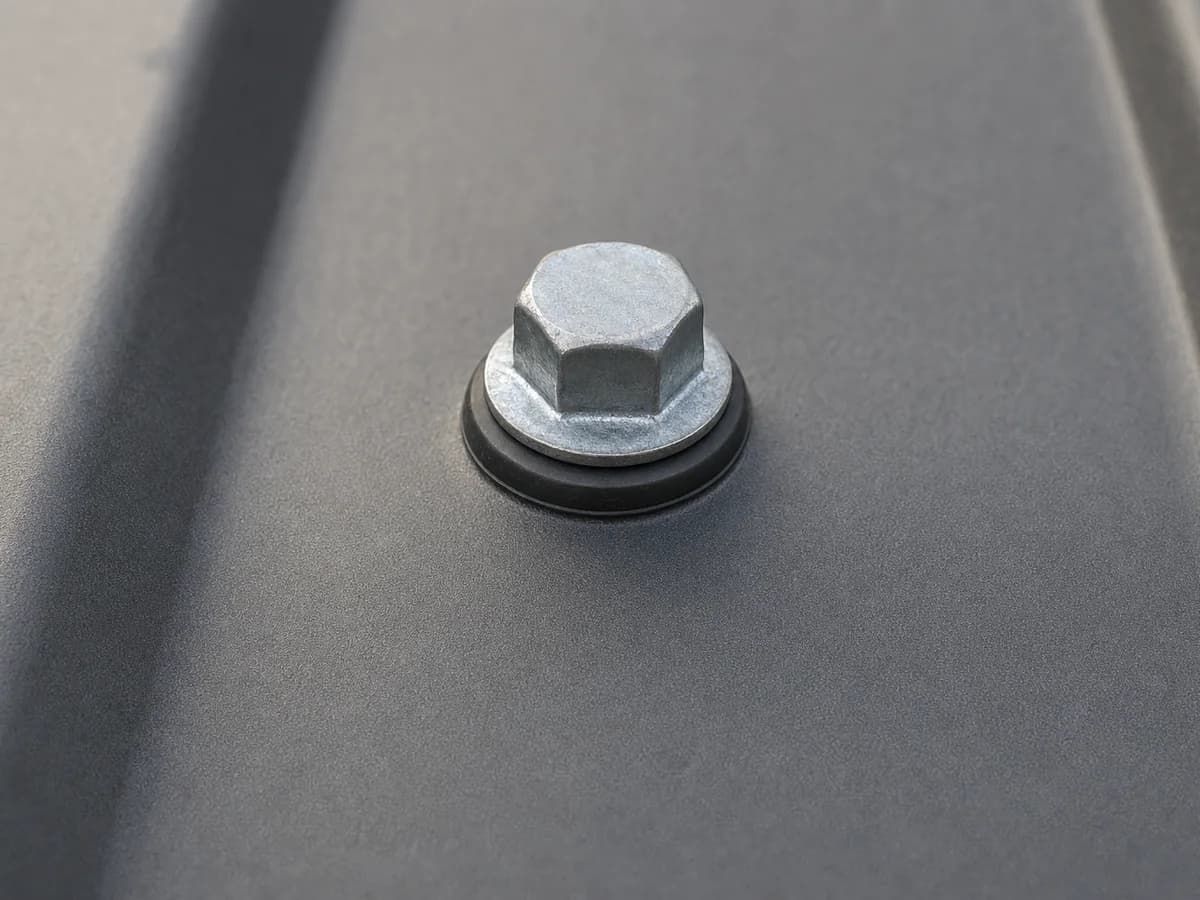
An exposed-fastener roof is not automatically a bad roof. Selling one without explaining how it differs from standing seam is the problem.
How Long Do Metal Roofs Last?
Service life is one reason homeowners consider paying more for metal. GAF gives general expectations of 20–30 years for asphalt shingles and 50-plus years for metal, while noting that weather, installation, and maintenance affect the outcome. Western States describes 40–60-plus years for its correctly installed Western Lock standing seam product. Those are expectations, not promises for every roof. [4][5]
A long warranty is not the same thing as a roof that cannot leak. Sheffield Metals distinguishes paint, substrate, and weathertight warranties. Ask what the specific warranty covers, what it excludes, and who handles installation-related problems. [6]
The useful question is: “What service life is reasonable for this exact system on my house, and what must I do to maintain it?”
When Is a Metal Roof Worth the Extra Cost?
When I would seriously consider standing seam
- You plan to keep the home for a long time. You have more opportunity to benefit from the roof’s potential service life.
- The premium fits your budget. Paying for metal shouldn’t force you to skip needed deck repairs or other parts of the installation.
- You want the appearance. It is reasonable to value a roof you like looking at, without pretending every extra dollar is guaranteed to come back.
- You have a capable installer and an appropriate specification. The proposal identifies the panel, attachment, finish, and details rather than simply saying “metal roof.”
When I would lean toward shingles—or keep the roof you have
- You need the lowest practical upfront replacement cost. A quality shingle system deserves a fair comparison.
- You expect to sell soon. Don’t assume a buyer will repay the full upgrade premium.
- Your current roof still has useful life. Compare a justified repair with replacement before paying to change materials.
- Financing makes the upgrade uncomfortable. Compare the total financed cost, not just a monthly payment.
- The look or upkeep doesn’t suit you. Metal can show visible waviness called oil canning; discuss appearance expectations before installation. [7]
There isn’t one ownership period—five, ten, or fifteen years—that makes metal automatically worth it. The price difference and your actual plans matter more than a slogan.
The Math Nobody Runs for You
Here’s a deliberately simple example using hypothetical, matching-scope quotes, not the mixed-source benchmarks above:
| Question | Quality shingle system | Standing seam system |
|---|---|---|
| Illustrative price today | $12,000 | $24,000 |
| Additional upfront cost for metal | — | $12,000 |
| If you move before either roof needs replacement | You paid the lower upfront amount | You have not personally avoided a later replacement |
| If shingles eventually need one replacement while metal remains serviceable | Two $12,000 installations would total $24,000 at unchanged prices | Initial installation would also total $24,000 before other costs |
That last row is not a prediction or a complete financial comparison. It leaves out maintenance, repairs, future price changes, financing, the value of keeping money available today, and resale differences. The roofs would also have different remaining service lives at that point. A storm could change either outcome.
My point is that metal does not automatically “pay for itself.” Get comparable quotes, consider how long you expect to own the house, and decide whether the additional service life and appearance justify the premium for you.
Treat energy savings as a separate consideration. ENERGY STAR explains that reflective roofs can reduce cooling demand, with results affected by climate and insulation. A metal roof’s finish matters; the word “metal” alone does not establish a savings percentage. [8]
What About Hurricanes and Coastal Homes?
After a storm like Sally, it is understandable to want the strongest roof you can afford. But “metal” is not a hurricane rating.
IBHS’s FORTIFIED Roof program addresses roof-deck attachment, sealed decks, roof edges, and tested roof coverings. Both metal and shingle systems can be part of a FORTIFIED roof. Ask about the complete assembly and the product’s suitability for the home’s exposure, not just the panel material. [9]
For properties exposed to salt air, verify the metal, coating, and warranty conditions for that location. Sheffield offers coastal-specific products and warranties; that is a reminder to confirm the exact system rather than assume every metal roof is equally suited to the coast. [6]
Standing seam is my preference, but the details still decide whether it is a good purchase.
Questions to Ask Before You Sign a Roofing Estimate
- What exactly am I buying? Ask for the manufacturer, panel or shingle name, metal type, thickness where applicable, and finish.
- What is included in the price? Compare removal, deck repairs, underlayment, flashing, ventilation, and cleanup on the same basis.
- Why is this system appropriate for my roof? Ask about slope, exposure, and manufacturer requirements.
- Who will install it? Ask to see completed examples of the same system and confirm who is responsible for the work.
- What maintenance is required? Request written instructions, inspection recommendations, and an explanation of likely service items.
- Which warranties am I getting? Separate material and finish coverage from workmanship and any weathertight coverage.
- If I have a problem, who do I call? Get the process in writing before you need it.
If the only explanation is “metal lasts longer,” you haven’t been given enough information to decide. For more, see our questions to ask a roofer.
My Line in the Sand
For the residential projects I recommend, I prefer standing seam when the budget supports a properly specified and installed system. If it doesn’t, I would seriously consider a quality shingle roof.
That isn’t a claim that every exposed-fastener roof will fail. It is my position on what I want a homeowner to understand before buying: the lower-cost metal option comes with a different attachment method and maintenance profile.
I would rather see you buy a roof you understand and can maintain than stretch your budget for a word on a sales proposal.
So, is a metal roof worth the price? It can be—but the system, installation, premium, and your plans for the home need to make sense together.
Before you sign, ask your roofer to explain why the proposed roof is the right purchase for your house.
Metal Roof Cost and Value FAQs
How much more does standing seam cost than shingles?
It can require a substantially larger budget, but there is no reliable universal multiplier. The benchmarks above come from different sources and scopes. Compare written local estimates for the same measured roof area, removal, repairs, and accessories before calculating your upgrade premium.
What does a metal roof cost for a 2,000-square-foot house?
First measure the actual roof surface; a 2,000-square-foot house does not necessarily have a 2,000-square-foot roof. For a roof surface of that size, the cited Middle Tennessee contractor publishes $16,000–$19,000 for exposed-fastener metal and $22,000–$38,000 for standing seam conversions. These are regional examples, not a quote for your home. [2]
Does a metal roof need maintenance?
Yes. Get the manufacturer’s requirements for the actual system. MBCI’s guidance calls attention to exposed fasteners and washers, standing seam connections, flashing, and sealant condition. Concealed fastening reduces one category of exposed penetration; it does not remove the need for inspection. [3]
Is standing seam worth the extra money over exposed-fastener metal?
It can be if you value concealed attachment and the appearance, and can afford the difference. Compare the complete installed systems and maintenance expectations. A higher-priced standing seam roof still needs an appropriate design and competent installation.
Are metal roofs noisy when it rains?
They can transmit rain noise, but the complete roof assembly matters. GAF notes that decking, underlayment, and insulation reduce noise transmission. Do not judge an enclosed home by the sound of rain on a bare metal shed roof, or assume every metal roof will sound identical. [10]
Will a metal roof lower my energy bills?
A reflective roof can reduce cooling demand, especially in hot, sunny conditions. Color, coating, insulation, and the building all affect the result. Ask for product-specific reflectance information rather than relying on a blanket savings percentage. Reflective roofing options also exist beyond metal. [8]
Is a metal roof hurricane-proof?
No roof purchase should be described as hurricane-proof. IBHS’s FORTIFIED guidance emphasizes the entire roof system, and accepts multiple roof-covering types when requirements are met. Ask about the assembly and applicable testing rather than assuming metal alone guarantees storm performance. [9]
Does a metal roof increase resale value enough to recover its cost?
Do not assume you will recover the full premium. If you expect to sell soon, ask a local real-estate professional how buyers in your market value that roof type, and compare that feedback with the actual upgrade cost. A longer potential lifespan does not by itself establish a resale return.
Sources and Pricing Notes
Research checked October 6, 2026. Sources support the associated pricing or technical discussion, not the author’s homeowner anecdote. Manufacturer and contractor sources have commercial interests; actual product instructions and comparable project estimates should guide the purchase.
- HomeGuide: Architectural shingle costs. Page dated November 7, 2025; accessed October 6, 2026. Published installation benchmark with removal discussed separately.
- The Metal Roofers: Replacing shingles with metal in Tennessee. Published 2026 Middle Tennessee conversion pricing; not Alabama-specific or a national average.
- MBCI: High-wind and hail protection with metal panels. Installation details and inspection considerations.
- GAF: Residential roofing FAQs. General service-life expectations and factors affecting them.
- Western States: Western Lock standing seam. Product-specific lifespan expectation, not a blanket warranty.
- Sheffield Metals: Warranties. Paint, substrate, weathertight, and coastal warranty distinctions.
- Sheffield Metals: Understanding oil canning. Appearance considerations for metal panels.
- ENERGY STAR: Cool roofs. Reflectance, thermal emittance, and climate/insulation considerations.
- IBHS: FORTIFIED Roof. System-level resilience and roof-covering requirements.
- GAF: Metal roof myths. Residential roof assembly and noise considerations.