

Roof Repairs
Roof Leak? What to Do Right Now
If your roof is leaking, keep people away from electrical hazards and sagging ceilings, protect belongings only where it is safe, document the damage, and arrange professional help to find the source. Stay off the wet roof. A leak needs prompt attention, but it does not automatically mean you need a new roof.
Protect the home and arrange an inspection
- Keep out of unsafe areas. Do not stand beneath a bulging or sagging ceiling. If water reaches wiring, fixtures, or electrical equipment, stay away. Do not touch wet switches or equipment, or enter water to reach a breaker. Have an electrician or the utility handle an unsafe shutoff. Call emergency services if there is fire, sparking, or an immediate collapse danger. CDC cautions against operating electrical equipment while standing in water. [C1]
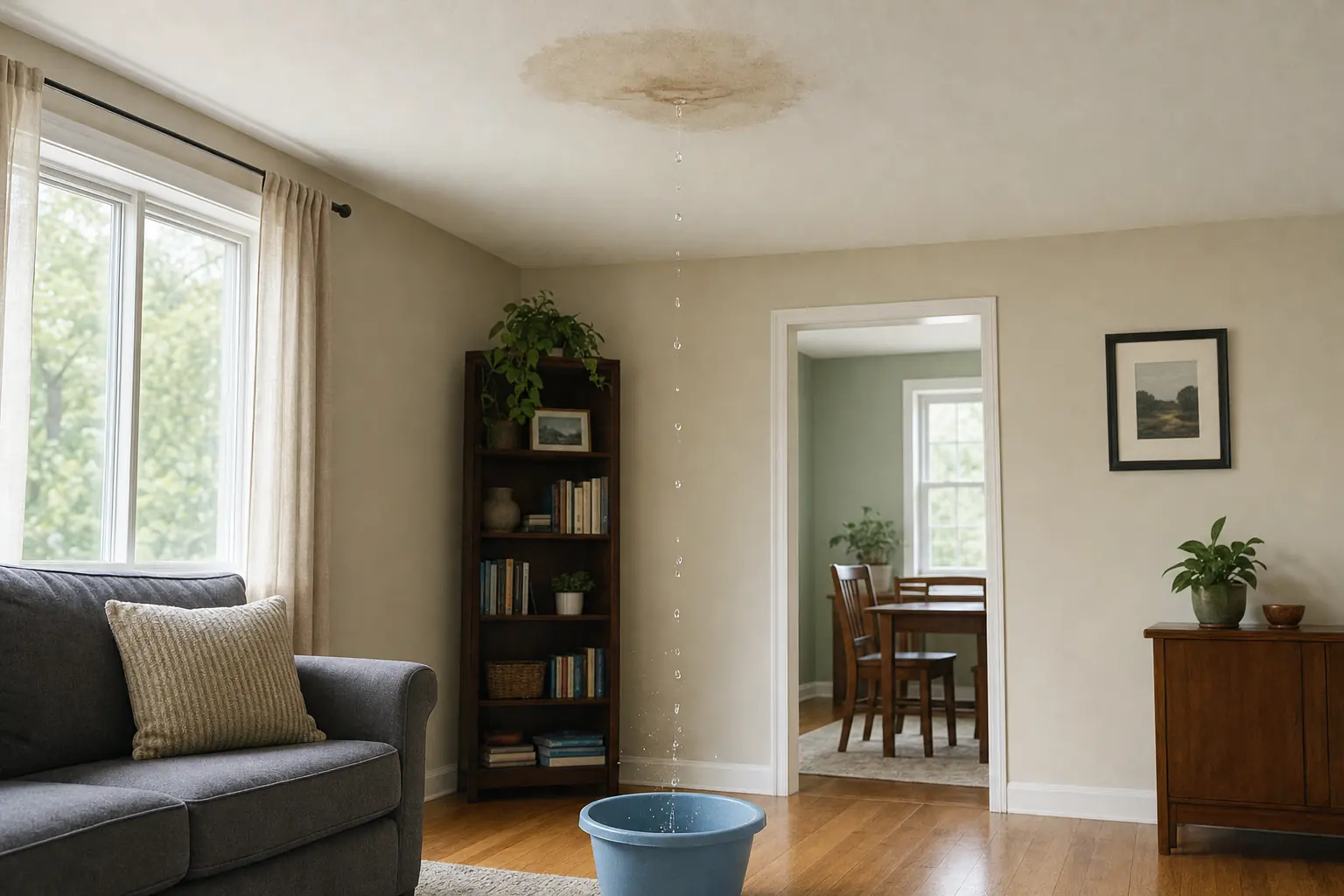
- Move belongings and contain drips only where safe. Move furniture or valuables away from the affected area and use a container if you can do so without entering a hazard. Do not puncture a sagging ceiling or climb into an unsafe attic.
- Document what you can see. Take photos from a safe location and note when the leak appeared, the weather, and which areas are affected. You do not need to climb onto the roof to collect useful information.
- Arrange professional temporary protection and diagnosis. Tell the roofer whether water is actively entering. Ask separately about emergency availability, temporary protection, and the permanent repair. Stay off a wet or storm-damaged roof. GAF describes professional tarping as a temporary measure while the permanent solution is arranged. [C2]
- Address wet materials and contact your insurer when appropriate. A stopped drip does not mean the ceiling, insulation, or wall cavity is dry. EPA recommends drying water-damaged areas and materials within 24–48 hours where possible to reduce mold risk. Extensive wet areas or hidden moisture may require restoration help. This is a prompt-action guideline, not a guarantee that mold will or will not develop. [C3]
If there is suspected storm damage, contact your insurer promptly and save photos and receipts for temporary measures. Ask how permanent work should be coordinated with the claim inspection. Do not delay necessary safety measures while waiting for a claim decision. [C4]
When a homeowner asks me about a leak, my first question is about the cause. Is it flashing? A pipe boot? Damaged roofing? A drainage problem?
Until someone identifies that problem, a repair price is mostly a guess.
How much will it cost to repair a leaking roof?
In my experience, some roof leak repairs fall in the $500–$1,500 range. That is a rough planning range for certain repairs, not a guaranteed price or a ceiling on the cost.
For additional context, Angi’s roof-leak repair guide, updated August 3, 2026, publishes a broader $700–$3,000 range. It is an external benchmark, not a RoofNuts rate or a Georgia-specific quote. Different scopes help explain why the ranges differ. [C5]
The final bill depends on the source, access, material, and extent of damage. Roof repairs, drying, and repairing the inside of the house may be separate jobs.
| Possible charge | What to ask before authorizing it |
|---|---|
| Inspection or diagnosis | What is inspected, and is the fee credited toward a repair? |
| Temporary protection | What will be installed, and what does the service actually cover? |
| Permanent roof repair | Which defect is being corrected, with what materials and warranty? |
| Decking or other concealed damage | How will extra work be documented, priced, and approved? |
| Interior drying and restoration | Is it included, or does another qualified professional handle it? |
Ask for photos and a written explanation of the diagnosed problem. An inspection fee and a completed repair are different services. Be clear about which one you are buying.
What might be causing the leak?
GAF identifies aging or damaged shingles, deteriorated flashing, and clogged gutters among common leak sources. Flashing protects roof joints and penetrations; blocked drainage can redirect water where it does not belong. [C6]
A pipe boot is a flashing assembly around a pipe that passes through the roof. The proposed repair should address the component that failed, rather than simply covering a visible stain inside the house.
Tell the inspector whether the water appears only during rain, which room is affected, and whether there was recent roof work. Those observations help guide the investigation, but they are not a diagnosis by themselves.
The goal is an explanation you can follow: Here is what failed, here is the evidence, and here is how this work addresses it.
How do you fix a leaking roof without replacing it?
Sometimes a targeted repair is enough. Depending on the diagnosis, a professional may recommend correcting flashing, replacing a failed pipe boot, repairing a damaged roofing section, or resolving a drainage problem.
Stopping the drip temporarily is different from fixing the underlying defect. Ask which solution you are being quoted and whether any affected materials still need to be dried or repaired.
I also look at the condition of the rest of the roof.
When an asphalt shingle roof is more than about 15 years old, I want a closer evaluation before recommending that the homeowner keep spending on individual repairs. That is my inspection checkpoint, not an automatic expiration date.
| A targeted repair may make sense when… | A broader replacement discussion may be warranted when… |
|---|---|
| The problem is isolated and can be identified | Problems are widespread or repeatedly returning |
| The surrounding roof is in serviceable condition | The roof has extensive deterioration or damage |
| A compatible repair can be made properly | A reliable repair cannot be made without substantially rebuilding the affected system |
| The scope and expected result are clear | Repeated small jobs are not resolving the underlying issue |
These are questions for an inspection, not a diagnosis from a roof’s age alone. Ask for the reasoning behind the recommendation and a second opinion if you are being pushed toward an expensive replacement without a clear explanation.
If replacement becomes the sensible option, our new roof cost guide for Georgia explains how to compare complete proposals.
Is it expensive to fix a roof leak?
It can be. It can also be far less expensive than replacing the entire roof.
The useful question is whether the proposed repair addresses the cause and makes sense for the roof’s condition. An isolated flashing problem and widespread deterioration are different jobs. They should not automatically receive the same recommendation.
Compare the diagnosis, scope, and warranty—not just the lowest repair price. Ask how additional damage will be handled before the contractor opens the area.
Waiting can allow more water damage. Arrange help promptly, even if the dripping stops when the rain ends.
More questions about roof leaks
Can I wait until the rain stops?
A professional may need safer weather to access the roof, but you can act now: keep clear of hazards, protect belongings where safe, document the damage, and call for help. Do not interpret a pause in dripping as confirmation that the problem is fixed.
Can I fix a roof leak from inside the attic?
Catching water inside is containment, not a permanent roof repair. Do not enter an attic with unsafe footing, wet wiring, or suspected structural damage. Have a professional locate the defect and specify the repair rather than trying to patch an unknown entry point from below.
Will homeowners insurance cover the leak?
That depends on the cause and your policy. Do not assume a leak automatically qualifies for a replacement roof or that every related expense is covered. Georgia’s insurance office advises keeping records, making necessary temporary protections, and coordinating permanent work with the insurer. Save receipts and ask about your deductible and coverage. [C4]
Does a stain prove I need a new roof?
No. A stain shows that moisture has affected the area; it does not establish the source, current activity, or required scope. Get the cause investigated before agreeing to a repair or replacement.
Who should I call first?
For immediate electrical, fire, or collapse danger, seek emergency help. For a suspected roof leak, contact a qualified roofer for diagnosis and ask about temporary protection if water is entering. Significant wet interior materials may also need a restoration professional. RoofNuts can help you understand contractor options, but do not wait for a consultation when immediate protection is needed.
Find the cause before choosing the solution
You should understand what is leaking, why it is leaking, and whether a repair is a sensible investment. Our guide to how to pick a roofer explains what to verify before hiring.
RoofNuts helps homeowners connect with qualified contractor options and understand the work being proposed. Tell us what is happening with your roof, and we will help you work through the options.
You stay in control of the decision.
Help me understand my repair options
Sources
- C1: CDC, What to Do to Protect Yourself From Electrical Hazards.
- C2: GAF, Understanding Roof Storm Damage.
- C3: EPA, A Brief Guide to Mold, Moisture and Your Home.
- C4: Georgia Office of the Commissioner of Insurance, Insurance Claim Tips.
- C5: Angi, Roof Leak Repair Cost, updated August 3, 2026.
- C6: GAF, How to Identify and Repair Roof Leaks.
Sources checked October 8, 2026. Jay’s repair-price range and age checkpoint are experience-based guidance, not universal prices or replacement rules.